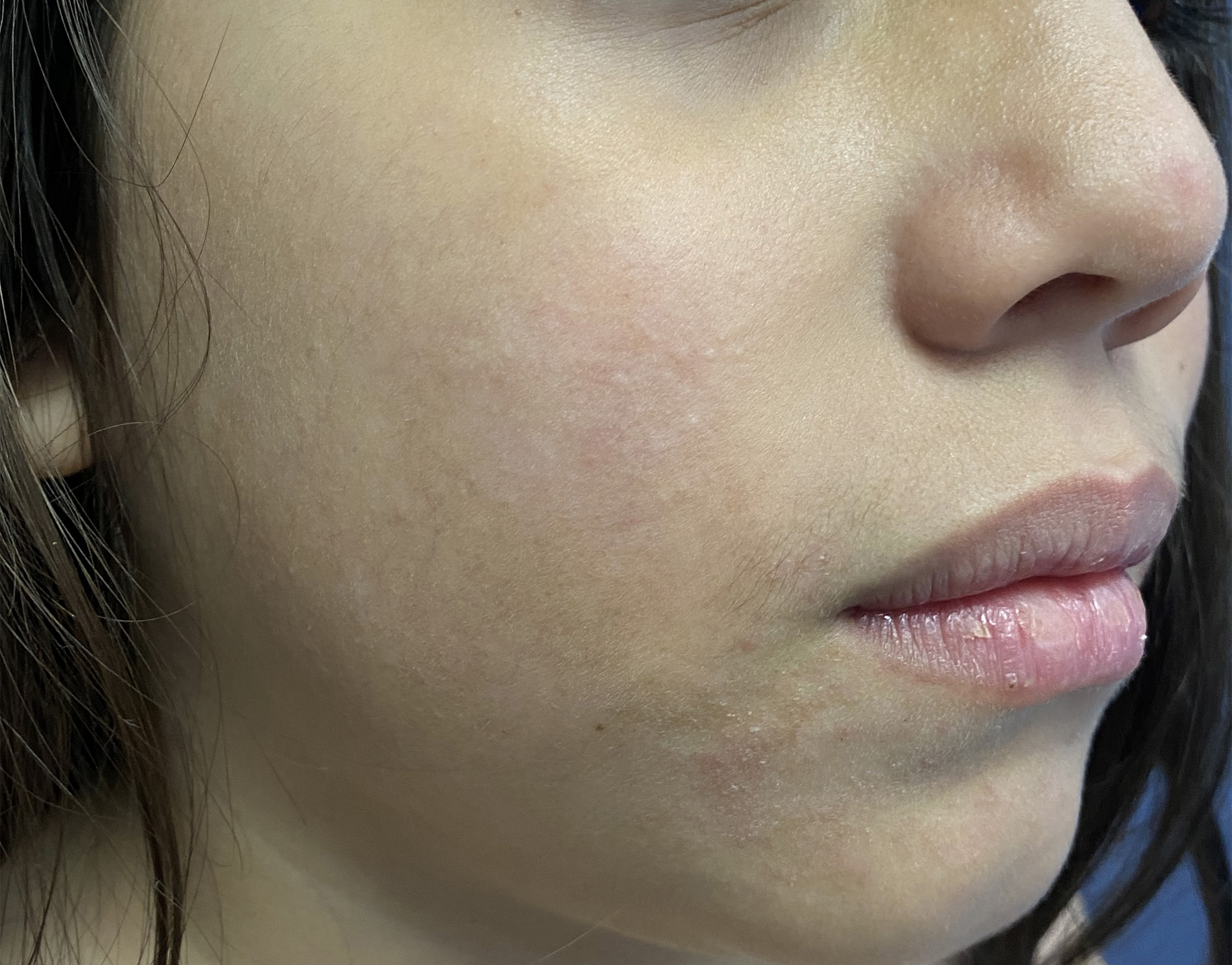
Folliculotropic mycosis fungoides in an 11-year-old child.
Downloads
DOI:
https://doi.org/10.26326/2281-9649.36.1.2872How to Cite
Abstract
Mycosis fungoides is a cutaneous T-cell lymphoma that is rare in children and may mimic various inflammatory skin conditions. We report the case of an 11-year-old boy with longstanding hypochromic and inflammatory lesions initially suggestive of dermatitis. Based on histopathologic and immunohistochemical findings, a diagnosis of folliculotropic mycosis fungoides was established. This case is presented to highlight the diagnostic challenges of this condition, which can only be overcome through histologic and immunohistochemical evaluation.
Mycosis fungoides (MF) accounts for approximately 50% of cutaneous T-cell lymphomas, with an incidence of 0.5 cases per 100,000 persons per year, and is far more frequent in adults than in children, in whom a prevalence of 5% of all T-cell lymphomas is estimated. According to the most recent World Health Organization/European Organization for Research and Treatment of Cancer classification, MF is categorized into classic, folliculotropic, pagetoid reticulosis, and granulomatous slack skin variants.
At any age, MF may have a chronic, indolent course that mimics inflammatory dermatoses. The mean age at diagnosis in children is approximately 10 years, with a male-to-female ratio of 1.1:1 that increases to 2.1:1 in adulthood, especially around 60 years of age.