Acute graft-versus-host disease.
Downloads
DOI:
https://doi.org/10.26326/2281-9649.36.1.2864How to Cite
Abstract
Acute graft-versus-host disease (GVHD) represents one of the leading causes of morbidity and mortality following allogeneic hematopoietic stem cell transplantation. The skin is the earliest and most frequently affected organ, and grade IV acute cutaneous GVHD presents with a clinical picture similar to toxic epidermal necrolysis, characterized by epidermal detachment and a high risk of sepsis, multiorgan failure, and death. Early, coordinated, multidisciplinary intervention is essential for survival.
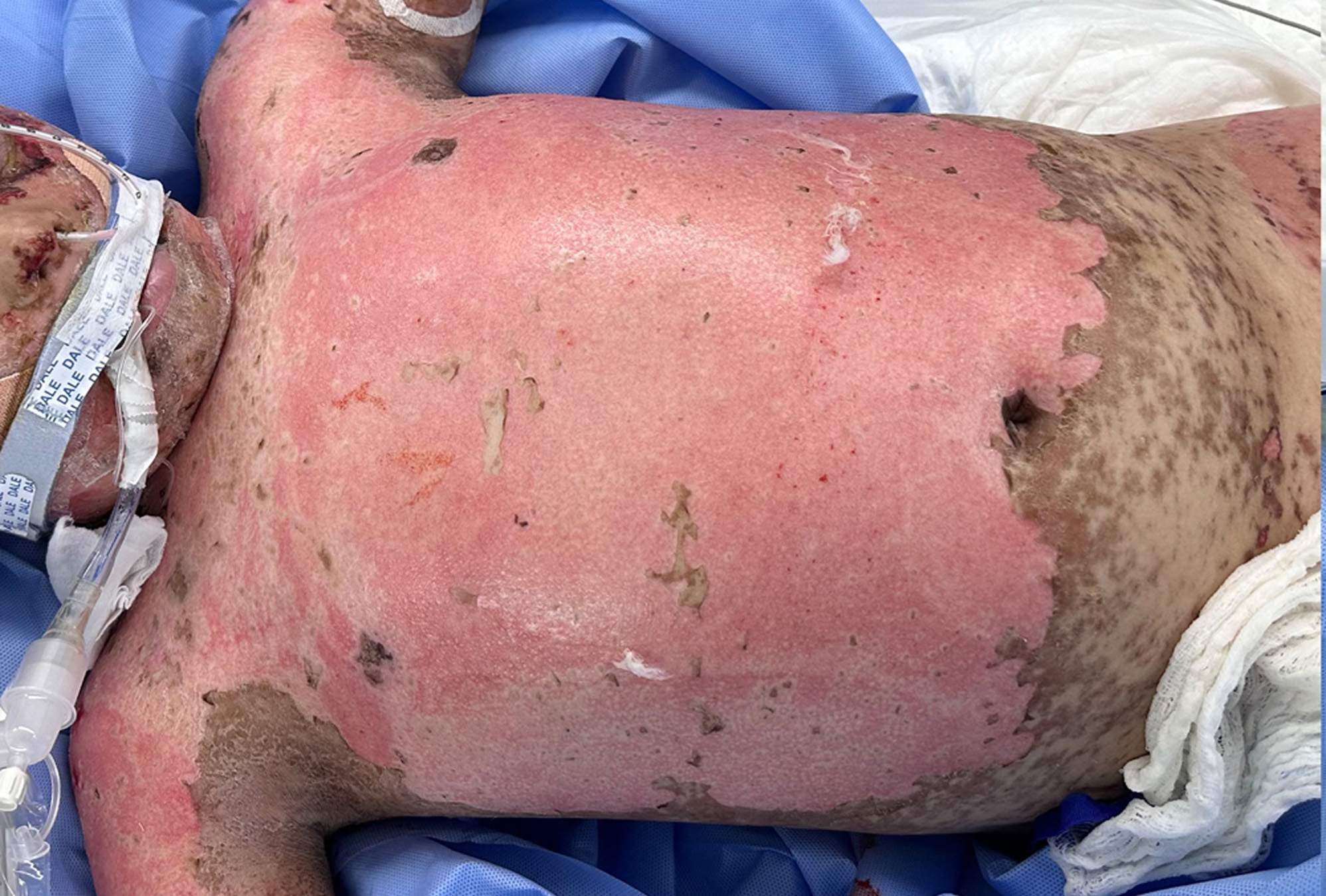
We report the case of a 9-year-old boy with early relapse of B-cell acute lymphoblastic leukemia who developed rapidly progressive grade IV acute cutaneous GVHD on day +25 post-transplant, involving 40% of the total body surface area, with epidermal loss and a positive Nikolsky sign. Initial treatment with high-dose intravenous methylprednisolone was insufficient, necessitating the use of ruxolitinib (a JAK1/2 inhibitor), intravenous immunoglobulins, and broad-spectrum antibiotics. A cytomegalovirus (CMV) reactivation was also promptly detected and treated.
Due to extensive skin barrier loss and severe pain, the patient underwent sequential surgical debridement and occlusive silver-based dressings under general anesthesia, managed similarly to a severe burn patient. Treatment was coordinated by a multidisciplinary team including pediatric plastic surgery, dermatology, ophthalmology, transplant immunology, intensive care, and rehabilitation. After three scheduled surgical procedures and optimization of immunomodulatory therapy, rapid re-epithelialization and clinical stabilization were achieved within 20 days of hospitalization. This case highlights that grade IV cutaneous GVHD can be compatible with survival when advanced therapy and burn unit–like wound management are initiated early under the supervision of an intensive multidisciplinary team.