Longitudinal improvement in epidermolysis bullosa simplex patients with de novo KRT5 mutations.
Downloads
DOI:
https://doi.org/10.26326/2281-9649.36.4.2980How to Cite
Abstract
Background/Objectives. Epidermolysis bullosa simplex (EBS) due to de novo KRT5 mutations often presents in infancy with severe multisystem disease, raising concern for poor long-term prognosis and influencing decisions regarding life-sustaining care. Limited longitudinal data make counseling and management decisions challenging. This study characterized early disease course and long-term outcomes across cutaneous, extracutaneous, functional, and symptom-based domains.
Methods. A retrospective chart review was conducted of patients with confirmed de novo KRT5 EBS followed at an interdisciplinary epidermolysis bullosa center.
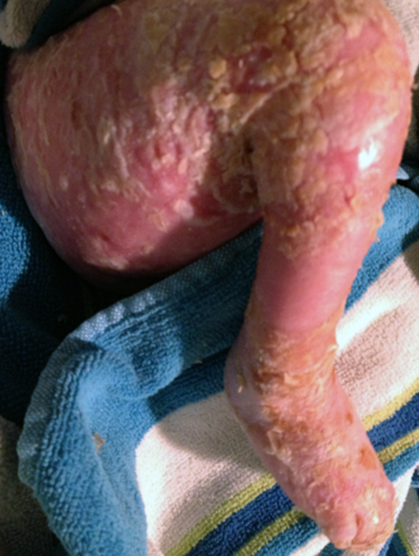
Results. Four male patients were identified, all requiring intensive care (30-90 days) for severe early disease with extensive skin involvement, feeding impairment, respiratory complications, and analgesic requirements. Three patients experienced additional hospitalizations within the first year of life for infectious and respiratory complications, while one was hospitalized for failure to thrive. Over time, blistering became less frequent and localized, feeding and motor function improved, and pain burden decreased. Pruritus followed a variable course, while neurobehavioral challenges emerged later in childhood and required ongoing intervention.
Conclusions. Severe early presentation in de novo KRT5 EBS is not indicative of long-term disease severity. Life-sustaining care is warranted during the early disease phase as meaningful improvement across clinical domains can occur with subsequent multidisciplinary management.