Recognizing BASCULE syndrome: a report of four cases.
Downloads
DOI:
https://doi.org/10.26326/2281-9649.36.3.2947How to Cite
Abstract
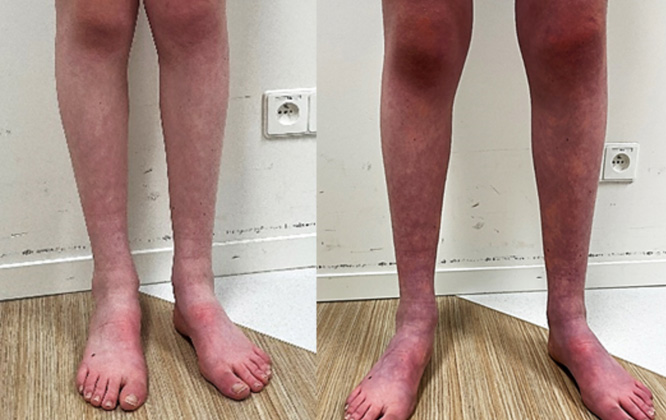
Background. BASCULE syndrome—an acronym for Bier anemic spots, (acro)cyanosis with urticaria-like eruption—is a descriptive clinical entity first identified in 2016. It is a benign, transient vasomotor dermatosis that predominantly affects adolescents and children, typically involving the lower extremities during prolonged standing. Reported associations include electrocardiographic abnormalities and various forms of autonomic dysfunction, most notably postural orthostatic tachycardia syndrome (POTS). Although BASCULE syndrome is considered rare, it is likely underdiagnosed in clinical practice.
Objective. To report a case series from a Belgian tertiary care center (Leuven University Hospitals) to expand current knowledge on BASCULE syndrome and facilitate its timely recognition.
Case presentation. Four adolescent patients (three females and one male) aged 13 to 16 years were identified. All patients presented with the characteristic clinical triad of acrocyanosis, Bier spots, and urticaria-like lesions involving the lower extremities. High-dose antihistamine therapy (desloratadine or bilastine) was initiated in two adolescents, both of whom reported mild symptomatic improvement. Signs of autonomic dysfunction, specifically orthostatic hypotension, were observed in one patient.
Conclusion. This case series of four adolescent patients from a Belgian tertiary center confirms the characteristic clinical findings of BASCULE syndrome across all subjects and underscores the importance of recognizing this benign vasomotor condition.