Clinical phenotypic spectrum of Schimmelpenning-Feuerstein-Mims syndrome: a systematic review.
Downloads
DOI:
https://doi.org/10.26326/2281-9649.36.2.2894How to Cite
Abstract
Background. Schimmelpenning–Feuerstein–Mims syndrome (SFMS) is a rare mosaic neurocutaneous disorder caused by postzygotic mutations affecting the RAS-MAPK signaling pathway. It is characterized by a linear epidermal sebaceous nevus associated with variable neurological, ocular, skeletal, and metabolic involvement. Despite nearly seven decades having elapsed since its initial description, comprehensive phenotypic data remain limited.
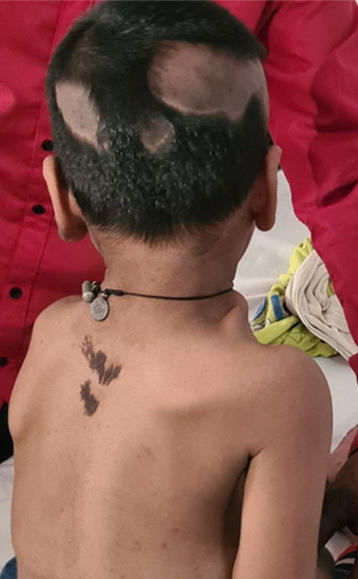
Methods. A systematic literature review (1957-2025) was conducted in accordance with PRISMA guidelines. Of 182 records identified, 28 studies met the inclusion criteria. One index case (a 5-year-old male with extensive epidermal sebaceous nevus, skeletal dysplasia, and severe hypophosphatemia – 0.58 mmol/L –) was added to the previously reported cohort.
Results. Epidermal–sebaceous nevus was present in 100% of cases. Extracutaneous involvement included neurological abnormalities (50-75%), ocular defects (40-60%), and skeletal anomalies (15-30%). FGF23-mediated hypophosphatemic rickets represents a distinct metabolic subgroup (5-15%) requiring specialized management. The historically overestimated risk of basal cell carcinoma (10-20%) reflects misclassification of benign trichoblastomas; the true risk of malignancy in childhood is <1%.
Interpretation. SFMS exists along a phenotypic continuum reflecting the timing of postzygotic RAS mosaicism. A modular diagnostic approach (skin findings plus neurological, ocular, or skeletal features) should replace the now-obsolete classic triad. Early multidisciplinary evaluation enables anticipatory management of neurological, ophthalmologic, and metabolic complications